The Supported by Nature project
- Nature-based Solutions for a Sustainable Baltic Sea

- Nature-based Solutions for a Sustainable Baltic Sea
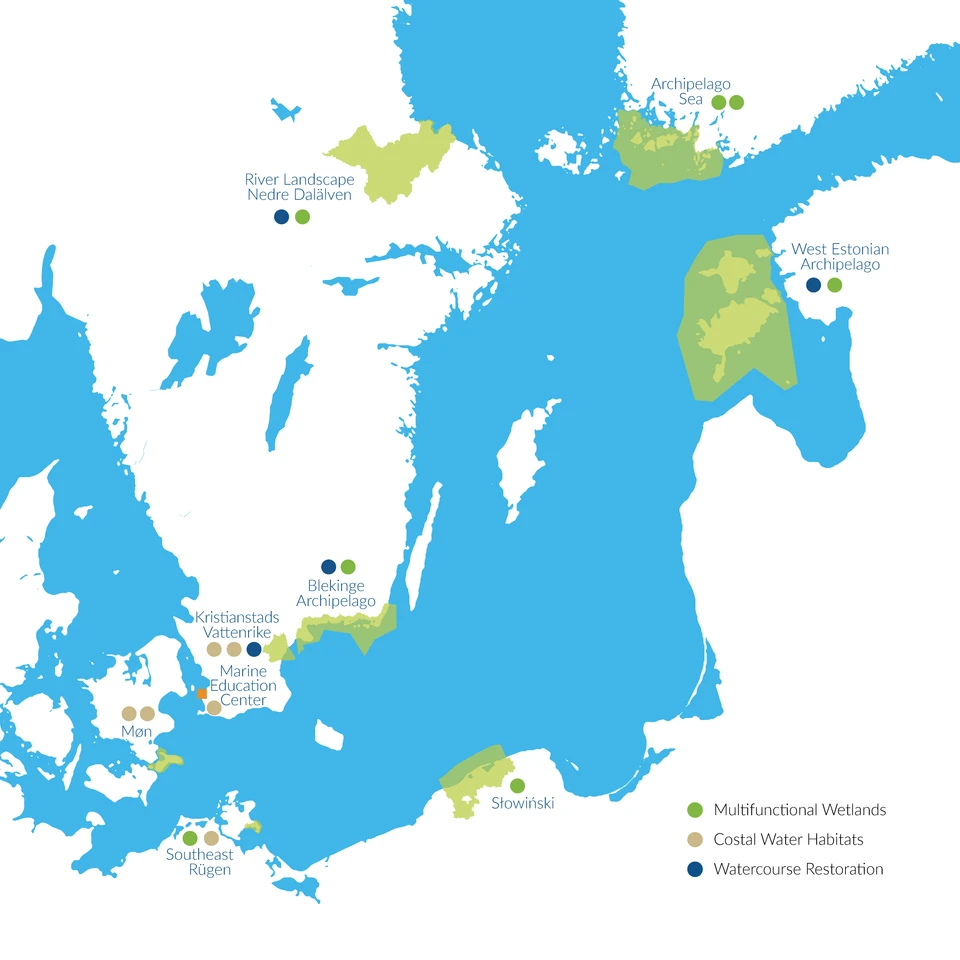
Supported by Nature is an international EU Interreg project aimed at promoting the use of nature-based solutions in the Baltic Sea region. The project runs from 2023 to 2026 and is a collaboration between UNESCO biosphere reserves from six countries around the Baltic Sea. Through collaboration between higher education and research institutions and local public authorities, the project partners collectively contribute a high level of expertise and extensive experience in collaborative processes.

The overall aim is to enhance understanding of nature-based solutions and their contribution to improving environmental conditions in the Baltic Sea, with a focus on multifunctional wetlands, coastal aquatic habitats and river restoration. The long-term aim is that this increased knowledge will lead to more frequent and more effective use of nature-based solutions in planning processes and in the management of both land and marine areas.
As part of Supported by Nature, a total of 17 learning centres have been established across the six countries around the Baltic Sea, to where nature-based solutions are demonstrated and further developed in practice. The focus is particularly on multifunctional wetlands, the restoration of watercourses and coastal marine habitats – initiatives that both benefit biodiversity and strengthen the resilience of landscapes to climate change.
The project comprises two key methods:
Vordingborg Municipality and the Møn UNESCO Biosphere Reserve are participating in the project with a particular focus on coastal aquatic habitats and are contributing two learning sites within the biosphere reserve: the restoration of a local stone reef in the coastal waters and the establishment of fish nurseries in harbour environment. The development of the learning sites is carried out in close collaboration with local stakeholders, and the sites will provide a framework for activities and outreach aimed at strengthening local understanding of how nature itself can be part of the solution to environmental and climate challenges.
Nature-based Solutions are multifunctional and cost-effective measures that tackle environmental problems and climate change using nature’s own tools. They contribute to protecting and enhancing ecosystems on land and in water, thereby benefiting both nature and people.
Nature-based solutions contribute to overcome specific challenges whilst offering additional benefits. For example, restoring a river can reduce nutrients in the water and prevent flooding and pollution, thereby helping to increase biodiversity, secure water supplies and promote fishing, recreation and tourism.
The Baltic Sea region is of great natural and cultural value and is of strategic importance to the economy and to cooperation between the countries in the region and beyond. However, the Baltic Sea faces environmental challenges and is one of the most polluted and heavily trafficked water areas in the world. The Baltic Sea’s unique characteristics make it extremely sensitive and vulnerable.
Almost 90 million people live in the catchment area, so the way we live and operate has a profound impact on the state of the Baltic Sea.
In this project, Vordingborg Municipality employs a multi-stakeholder approach, in which nature-based solutions are developed in collaboration with research partners, local nature and leisure organisations, and volunteers. Together, we work on establishing and promoting stone reefs and fish nurseries to enhance biodiversity in the waters around Møn.
Through dialogue, workshops and joint development processes, we develop solutions that both benefit nature and create value for the local community. This broad involvement ensures that the initiatives are based on both specialist knowledge and local experience, and are therefore firmly rooted in the area.
The partners are involved in the establishment, monitoring and dissemination of the project’s activities. Researchers contribute with professional expertise, whilst local organisations and volunteers bring practical experience and insight into local conditions. Together, we monitor developments on the reef and work on new methods for documenting underwater life.
By bringing together different perspectives, the project creates a strong foundation for learning, knowledge-sharing and the development of solutions that can contribute to a richer marine environment and engage the local community.
In the Møn UNESCO Biosphere Reserve, the project is being carried out in collaboration in between:
The project is a joint initiative of Biosphere for Baltic, a network of UNESCO biosphere reserves around the Baltic Sea. Biosphere reserves are model areas for sustainable development, designated by UNESCO as examples of sustainable development. With the Blekinge Archipelago Biosphere Reserve as the lead partner, the partners from the six countries in the network are collaborating and sharing knowledge and experience.
Duration: November 2023 - October 2026
Total budget: 4,47 millioner €
EU funding: 3,58 millioner €
Supported by Nature is funded by the EU’s Interreg Baltic Sea Region Programme